
Choosing a Desert Shadow Colour for Grey Hair
Grey hair is something to embrace in whatever way feels right for you. You may love your natural silver, want to soften or blend your greys, turn them into beautiful highlights, or return to a colour closer to your natural shade.
Desert Shadow Organic Hair Colours give you the freedom to work with your greys rather than against them.
Because our colours are made from botanical ingredients and contain no bleach or peroxide, they work differently from conventional hair dyes. Your natural hair colour, percentage of grey, previous colouring and the way your individual hair takes botanical colour will all influence your final result.
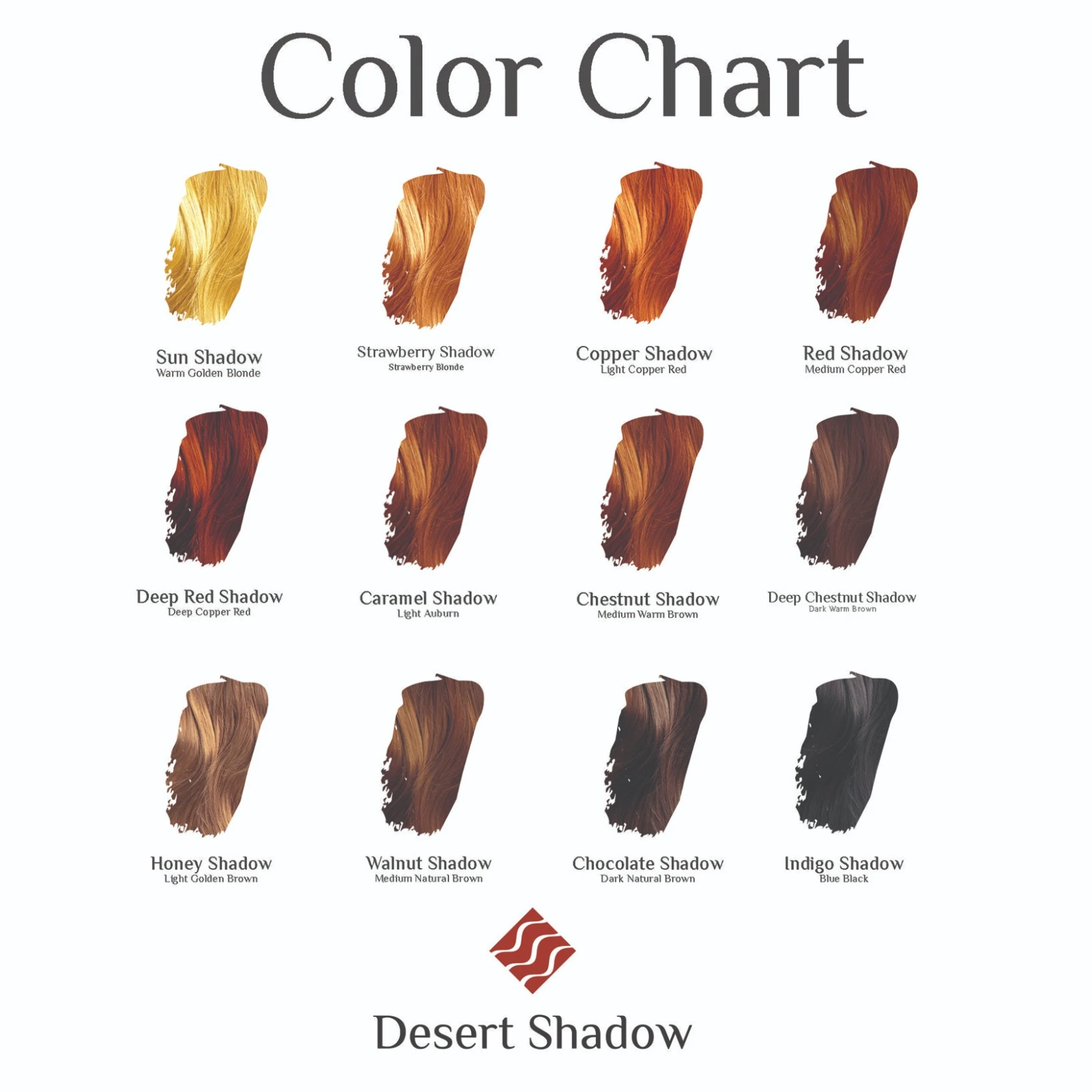
This guide will help you understand what to consider when choosing your colour and what you can expect from each of our 12 Desert Shadow shades.
Before choosing your colour
1. Consider your natural hair colour
Your natural or current hair colour is your starting point.
Desert Shadow colours deposit colour onto the hair. They do not contain bleach or peroxide, so they cannot lighten your existing hair colour.
You can:
-
colour-match your natural shade
-
choose a darker shade
-
choose a lighter Desert Shadow shade to colour your greys while allowing your naturally darker hair to remain darker
That last option can create beautiful, natural-looking highlights because the grey strands take the lighter colour while your naturally pigmented hair remains deeper.
2. Think about how much grey you have
The percentage of grey in your hair influences how noticeable your chosen Desert Shadow colour will be.
30% grey or less
You can choose a shade close to your natural colour for a more even result, or choose something lighter and allow your grey strands to become natural highlights.
Around 50% grey or more
You can still colour-match your natural shade if you prefer a more even overall colour.
Alternatively, choosing a lighter shade can create a softer, multi-tonal result and may make regrowth less noticeable.
Around 80% grey or more
You may find a lighter shade easier to maintain because the contrast between your new grey growth and coloured hair will be softer.
You can still choose a shade close to your original natural colour if that is the look you prefer—just remember that darker colours generally create more visible contrast as your grey regrowth appears.
These percentages are a guide, not a rule. Your desired result is just as important as the amount of grey you have.
3. If you are unsure, start lighter
If you are deciding between two shades, we generally recommend starting with the lighter option.
Desert Shadow colours build with repeated applications and can become richer and, in some cases, darker over time.
Because our colours cannot lighten the hair, it is easier to start lighter and move darker later than to begin with a shade that is deeper than you wanted.
4. Remember that botanical colour builds
Once you have achieved the depth and tone you love, you usually do not need to repeatedly colour the full length of your hair.
Concentrate future applications on your regrowth and refresh the lengths periodically—approximately every fourth or fifth application, or as needed.
This helps prevent unnecessary colour build-up through the ends while also saving time and product.
5. Think carefully if you plan to bleach or lighten your hair later
Desert Shadow Organic Hair Colours are designed for people looking for beautiful, long-lasting botanical colour.
If you regularly change between dark and light hair or think you may want to bleach your hair in the future, consider this before choosing your colour—particularly with our deeper and red shades.
Always speak with your hairdresser before attempting to bleach or significantly lighten hair that has been coloured with botanical hair colour.
Our 12 shades on grey hair
Sun Shadow — 9.3 Warm Golden Blonde
Soft, warm golden blonde
Sun Shadow adds a beautiful golden tone to grey, white and naturally light hair.
It is an excellent choice if you want to soften silver strands or turn your greys into warm golden highlights without dramatically changing your overall appearance.
On grey + blonde hair:
Expect an overall golden tone, with the grey strands potentially appearing slightly lighter and creating natural dimension.
On grey + light brown hair:
The grey strands will take the golden colour more noticeably, creating a highlighted effect. Your light brown hair may develop a subtle golden warmth.
On grey + medium or dark brown hair:
Sun Shadow will primarily colour the grey strands. It will not lighten the darker hair, so the result can look like soft golden highlights scattered through your natural colour.
The more grey you have, the more noticeable the golden effect will be.
Processing guide:
Approximately 30–45 minutes for a subtle effect or 1.5–3 hours for a fuller golden result.
Sun Shadow has yellow/golden undertones, so always strand test to determine the colour and processing time you prefer.
Strawberry Shadow — 8.4 Strawberry Blonde / Light Red
Soft, warm strawberry red
Strawberry Shadow adds a warm strawberry-blonde to light-red glow to grey and lighter hair.
This is a lovely option if you want something warmer than blonde but softer than our stronger copper and red shades.
On grey + blonde hair:
Expect a warm strawberry-red tone, with natural variation between the grey and pigmented strands.
On grey + light brown hair:
The grey strands will appear brighter and warmer, while the light brown hair develops a subtle warm-red glow.
On grey + medium or dark brown hair:
The colour will be most noticeable on the grey strands. Your darker hair may develop a subtle warm reflect, particularly in the sunlight.
The more grey you have, the more noticeable Strawberry Shadow will be.
Processing guide:
Approximately 30–45 minutes for a subtle glow or 1.5–3 hours for a fuller strawberry-red result.
Strawberry Shadow contains warm copper/red undertones. Always strand test first, particularly on very light or highly porous hair.
Copper Shadow — 7.4 Hot Copper Red
Bright, vibrant copper
Copper Shadow is for those who love warmth and want their greys to become a feature.
On grey and light hair it produces a bold, hot copper-red result.
On grey + blonde hair:
Expect a vibrant copper-red result, with the grey strands potentially appearing slightly brighter.
On grey + light brown hair:
The greys become bright copper while the naturally pigmented hair develops a warm copper-red glow.
On grey + medium brown hair:
The grey strands will show the copper most strongly. Medium brown hair develops a deeper, more subtle copper-red warmth.
On grey + dark brown hair:
The grey strands become copper-red while the darker hair may show a subtle red reflect in sunlight.
The lighter your starting colour and the more grey you have, the more vibrant Copper Shadow will appear.
Processing guide:
Approximately 30–45 minutes for a lighter copper effect or 2–3 hours for a fuller copper-red result.
Always strand test before full application.
Red Shadow — 6.4 Medium Copper Red
Fiery, warm red
Red Shadow creates a stronger and deeper copper-red result than Copper Shadow.
On grey + blonde hair:
Expect a fiery medium copper-red colour with natural variation.
On grey + light brown hair:
The grey strands may appear brighter while the pigmented hair develops a rich, warm red tone.
On grey + medium brown hair:
The greys become fiery copper-red while the naturally brown hair develops a noticeable warm-red glow.
On grey + dark brown hair:
The grey strands take the red colour most noticeably. Darker hair may show a subtle red reflect in sunlight.
Processing guide:
Approximately 30–45 minutes for a softer fiery glow or 2–3 hours for a fuller red result.
Red Shadow has strong copper-red undertones. Strand testing is particularly important on lighter hair.
Deep Red Shadow — 6.64 Deep Copper Red
Deep, intense copper-red
Deep Red Shadow creates a richer, deeper red than Red Shadow.
It works beautifully when you want your greys to become rich red highlights rather than trying to hide them completely.
On grey + blonde hair:
Expect a vibrant deep copper-red result.
On grey + light brown hair:
The grey strands may appear brighter while the rest of the hair develops a deeper fiery-red tone.
On grey + medium brown hair:
The grey strands take the red strongly while the brown hair develops a rich red to burgundy warmth.
On grey + dark brown hair:
The grey strands become deep copper-red while the darker hair may show subtle red reflects in sunlight.
The lighter your hair and the greater your percentage of grey, the more vibrant the result will appear.
Processing guide:
Approximately 30–45 minutes for a softer copper-red glow or 2–3 hours for the fuller effect.
Always strand test before full application.
Caramel Shadow — 6.54 Auburn Red
Warm, spicy auburn
Caramel Shadow sits beautifully between red and brown.
It adds warm auburn tones to grey hair and can bring cinnamon-like warmth to naturally brown hair.
On grey + blonde hair:
Expect a warm, spicy auburn-red result.
On grey + light brown hair:
The greys may appear slightly brighter while the overall result develops warm auburn depth.
On grey + medium brown hair:
The grey strands take the auburn colour more strongly while the brown hair develops a subtle warm-red glow.
On grey + dark brown hair:
The greys become auburn while the darker hair may show subtle red warmth, particularly in sunlight.
Caramel Shadow contains noticeable auburn/red tones. If you are looking for a neutral brown without warmth, another shade may suit you better.
For grey hair, follow the grey coverage mixing instructions and always strand test first.
Chestnut Shadow — 5.5 Medium Warm Brown
Warm medium brown with red tones
Chestnut Shadow creates a beautiful medium warm brown with noticeable red undertones.
It is ideal for those who want brunette depth but enjoy warmth in their colour.
On grey + blonde hair:
Expect a warm medium reddish-brown result.
On grey + light brown hair:
The grey strands may appear slightly lighter, creating natural dimension, while the overall hair develops a warm medium brown-red tone.
On grey + medium brown hair:
The greys become warm red-brown while the naturally brown hair develops a richer warm glow.
On grey + dark brown hair:
The greys take the warm brown-red colour while the darker hair may show subtle red reflects in sunlight.
Chestnut Shadow has strong red tones. If you want a more neutral brunette, consider Walnut Shadow instead.
For grey hair, follow the grey coverage mixing instructions and always strand test.
Honey Shadow — 7.31 Light Golden Brown
Soft golden light brown
Honey Shadow is a beautiful option for people who want to soften their greys with a natural-looking golden brown rather than a blonde or red.
It gives a sweet golden light-brown colour to grey hair and can add golden warmth to blonde, light brown and medium brown hair.
On grey + blonde hair:
Expect a soft golden light-brown effect.
On grey + light brown hair:
The greys take the golden-brown colour while the existing hair develops added warmth and dimension.
On grey + medium or darker brown hair:
Honey Shadow can turn the grey strands into soft golden-brown highlights while leaving the naturally darker hair deeper.
This can be particularly useful if you want to work with your greys rather than create a completely uniform result.
Honey Shadow does not lighten naturally darker hair.
For grey hair, follow the grey coverage mixing instructions and strand test before full application.
Walnut Shadow — 5.0 Medium Natural Brown
The Natural Brunette
Walnut Shadow creates natural medium-brown tones and is an excellent option for those wanting a brunette result without the stronger red tones found in Chestnut.
On grey + blonde hair:
Expect the grey and light strands to develop medium natural-brown tones.
On grey + light brown hair:
The grey strands become medium brown while the naturally pigmented hair develops a richer, more even brunette tone.
On grey + medium brown hair:
Walnut can help blend the grey into the surrounding hair and even the overall brown tone.
On grey + dark brown hair:
The grey strands will take the medium-brown colour while the naturally dark hair remains deeper, creating natural variation.
Walnut Shadow does not lighten the hair because it contains no bleach or peroxide.
For grey hair, follow the grey coverage mixing instructions. Because botanical colour can build with repeated applications, concentrate on the regrowth once you have achieved the depth you like.
Always strand test before full application.
Chocolate Shadow — 3.1 Dark Brown
Rich, classic dark brown
Chocolate Shadow gives rich dark-chocolate tones and is best suited to people wanting a deeper brunette result.
It is particularly suited to naturally medium-brown and dark-brown hair.
On grey + medium brown hair:
Chocolate Shadow can colour the grey strands dark brown while enriching the naturally brown hair.
On grey + dark brown hair:
The grey strands can be brought closer to the surrounding dark-brown hair, helping create a more blended overall result.
On blonde or light hair:
Moving from blonde or very light hair to Chocolate Shadow requires additional preparation. A Red Shadow or Copper Shadow base is used first to create the warm foundation needed before applying the darker colour.
What about grey hair and a red base?
Having a high percentage of grey does not automatically mean every customer needs a red base.
Some grey hair accepts botanical colour readily, while other grey can be stubborn or colour resistant.
Begin by following the Desert Shadow grey-coverage preparation and mixing instructions.
If your grey is resistant or you have difficulty achieving sufficient depth with Chocolate Shadow, additional preparation with our Pre Colour Wash Bar or a Red Shadow/Copper Shadow base may be recommended.
A red base can provide a stronger foundation for stubborn grey before applying Chocolate Shadow.
If you are unsure, contact the Desert Shadow team before colouring and we can help guide you.
Always strand test first.
Deep Chestnut Shadow — Darkest Brown
Deep brunette with subtle warm-red reflects
Deep Chestnut is our deepest brown, sitting only a few shades away from black.
It gives very dark-brown tones with subtle red warmth that may become more noticeable in sunlight.
It is best suited to naturally brown or dark hair and to those wanting a very deep brunette result.
On grey + medium or dark brown hair:
The grey strands take the deep brunette colour while the naturally darker hair develops added richness and depth.
On blonde or very light hair:
A Red Shadow or Copper Shadow base is required before moving into this very dark shade.
On stubborn or colour-resistant grey:
A red base may also be needed if the grey does not take the darker colour sufficiently using the standard grey-coverage method.
Follow the Desert Shadow grey-coverage instructions and strand test before committing to the full application.
Indigo Shadow — 1.17 Blue Black
Dark, mysterious blue-black
Indigo Shadow is our deepest colour and creates blue-black tones on medium to dark-brown hair.
Because Indigo behaves differently from our other colours, it requires special preparation when colouring grey, blonde or light hair.
Important: grey hair requires a red base
If you have grey hair and want to use Indigo Shadow, you must first apply a Red Shadow or Copper Shadow base.
The red base creates the warm foundation needed for Indigo to produce a balanced dark result. Without this foundation, light or grey hair can develop unwanted blue, green or ashy tones.
The same principle applies when taking blonde or very light hair into Indigo.
Follow the Desert Shadow red-base and Indigo instructions carefully before applying this shade.
If you are unsure whether Indigo is suitable for your hair, contact the Desert Shadow team before colouring.
Always strand test first.
Getting the best result on grey hair
Grey hair can sometimes need a little more preparation than naturally pigmented hair.
For the best colour uptake:
-
Wash immediately before colouring. Shampoo twice if necessary to remove natural oils and product build-up from the roots.
-
Towel dry well. Apply your Desert Shadow colour to damp—not dripping wet—hair unless the instructions for your chosen method state otherwise.
-
Follow the grey coverage mixing instructions included with your colour.
-
Apply generously. Work in sections and make sure the grey areas are thoroughly coated.
-
Keep the colour moist. Wrap your hair while processing. If the botanical paste dries out, colour uptake can be reduced.
-
Allow sufficient processing time. For full grey coverage, approximately 3 hours is generally recommended unless the instructions for your chosen colour specify otherwise.
What if my grey is resistant?
Some grey hair is naturally more resistant to colour than others.
If you have followed the grey coverage instructions and your grey is still not taking the colour well, our Pre Colour Wash Bar may help prepare stubborn hair immediately before colouring.
For stubborn grey when using very dark shades such as Chocolate or Deep Chestnut, a Red Shadow or Copper Shadow base may also be recommended if the standard grey-coverage method does not provide sufficient depth.
Indigo Shadow is different: a red base is always required when using Indigo on grey hair.
When to use a Red Shadow or Copper Shadow base
A red base is used to create a warm foundation before applying certain darker Desert Shadow shades.
You may need a red base when:
-
moving from blonde or very light hair to Chocolate, Deep Chestnut or Indigo
-
colouring stubborn or colour-resistant grey with Chocolate or Deep Chestnut when standard grey-coverage preparation has not produced sufficient depth
-
using Indigo Shadow on grey hair
Indigo Shadow always requires a red base on grey hair.
Either Red Shadow or Copper Shadow can be used as the base.
Do not use a red base before the other Desert Shadow shades unless specifically advised.
A final note about your colour result
Botanical hair colour is beautifully individual.
Two people using exactly the same Desert Shadow shade can achieve slightly different results because starting colour, percentage of grey, porosity, previous colouring, product build-up and individual hair characteristics all influence how botanical colour develops.
This natural variation is part of what makes plant colour so beautiful—the grey strands can become highlights and create depth and dimension rather than producing the flat, uniform effect associated with some conventional dyes.
Always perform a strand test before your first full application.
A strand test will show you how your own hair responds to the colour and can help you decide whether the shade and processing time are right for you.
And remember: if you're unsure, start lighter. You can always move deeper with your next application.
If you need help choosing your Desert Shadow colour, contact our team with a clear photo of your hair taken in natural daylight, your approximate percentage of grey, your current/natural colour, any previous colour treatments and the result you would like to achieve.
We’ll help guide you towards the Desert Shadow colour that best suits you and your hair.